









Cup Stype Compact Design Lightweight Miniature Harmonic drive
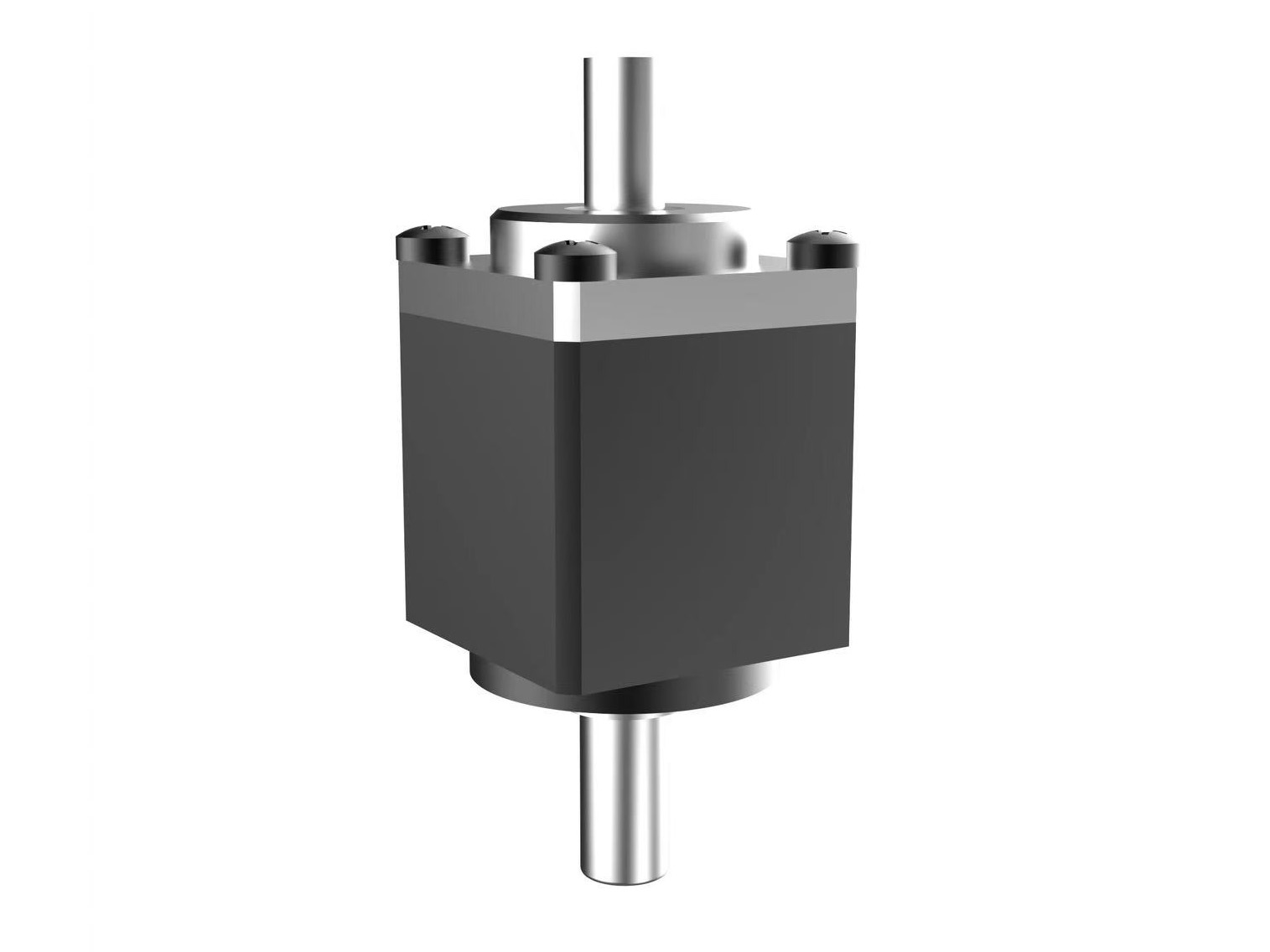


● Introduction
Features
● Compact size and lightweight design
● Compact and streamlined structure
● Excellent rotational accuracy and positioning precision
● Coaxial input and output configuration
Specification
Sheet 1
FAQ
Q1: What is the HONPINE CSF Mini Harmonic Reducer?
The HONPINE CSF Mini Harmonic Reducer is a compact precision harmonic reducer designed for robotic joints and space-constrained automation systems. It is available in miniature sizes including CSF 14, 17, 20, 25, and 32, providing high reduction performance in a compact and lightweight package.
Q2: What makes the CSF Mini Harmonic Reducer suitable for humanoid robot joints?
Humanoid robot joints, particularly finger, wrist, and other small joints, have extremely limited installation space and strict weight requirements. The CSF Mini Harmonic Reducer uses a compact structure to provide precision reduction while minimizing the space and load added to the robotic joint. This makes it suitable for miniature humanoid robot joints where conventional reducers may be too large or heavy.
Q3: What applications are suitable for the CSF Mini Harmonic Reducer?
The CSF Mini Harmonic Reducer can be used in industrial robot joints, humanoid robot fingers and wrists, 3C electronics manufacturing equipment, aerospace mechanisms, PCB AOI inspection equipment, motor rotor dispensing systems, and other precision automation applications where compact dimensions and accurate motion transmission are required.
Q4: What CSF Mini Harmonic Reducer sizes are available?
The HONPINE CSF Mini series includes multiple compact sizes, such as CSF 14, CSF 17, CSF 20, CSF 25, and CSF 32. The available size should be selected according to the required output torque, reduction ratio, installation space, speed, and operating conditions.
Q5: Why choose a mini harmonic reducer instead of a standard-size harmonic reducer?
The main advantage is integration efficiency. A standard harmonic reducer may provide sufficient performance but occupy more space than necessary for a miniature robot joint or compact automation mechanism. A mini harmonic reducer allows engineers to achieve precision reduction in a smaller mechanical envelope, helping reduce joint size, weight, and the mechanical load imposed on surrounding components.
Q6: Is the CSF Mini Harmonic Reducer suitable for precision positioning?
Yes. Harmonic reduction technology is well suited to precision positioning because of its high reduction capability, compact structure, and low-backlash transmission characteristics. The actual positioning accuracy of a complete system, however, also depends on the motor, encoder resolution, control algorithm, mechanical stiffness, assembly accuracy, and load conditions.
Q7: How should engineers select the right CSF Mini size?
Selection should not be based on reducer size alone. Engineers should evaluate continuous and peak output torque, input speed, reduction ratio, allowable load, operating duty cycle, installation dimensions, and required positioning performance. For robotic applications, joint inertia and acceleration should also be considered because dynamic loads can be significantly higher than the static payload.
Q8: Can the CSF Mini Harmonic Reducer be integrated with a servo motor?
Yes. The CSF Mini Harmonic Reducer can be combined with a suitable servo motor to create a compact precision rotary drive. For robot joint applications, engineers can also evaluate the motor, encoder, drive, and reducer as a complete joint architecture rather than selecting each component independently.
Q9: What are the main advantages of the HONPINE CSF Mini Harmonic Reducer?
The CSF Mini Harmonic Reducer focuses on compactness, dimensional precision, smooth rotation, low noise, lightweight construction, and cost-effective precision transmission. These characteristics make it particularly useful where installation space and joint weight are critical design constraints.
Q10: Can HONPINE provide a CSF Mini Harmonic Reducer for a customized robot joint?
Yes. For special-purpose robotic joints and customized automation equipment, the reducer should be evaluated according to the complete mechanical and motion requirements. HONPINE can assess parameters such as joint torque, speed, reduction ratio, installation dimensions, motor matching, and application conditions to help determine a suitable CSF Mini configuration.
Download(3D /PDF)